
Parked Car Accident: Rate Impact and Reporting Rules
Find Coverage After a Traffic ViolationWhat qualifies as an at-fault accident with a parked vehicle
Any collision where your moving vehicle strikes a legally parked car makes you automatically at-fault regardless of circumstances. This includes parking lot fender benders, sideswipe contact while parallel parking, and backing into a parked vehicle in a driveway or street.
Insurance carriers classify these as at-fault property damage claims because the parked vehicle had no opportunity to avoid the collision. Even if the parked car was poorly positioned, over the line, or in a tight spot that made maneuvering difficult, the moving vehicle bears 100% liability in standard collision scenarios.
The distinction matters because liability coverage pays for damage to the other vehicle, while your own vehicle damage requires collision coverage if you want it repaired through insurance. Many drivers after violations carry liability-only policies to reduce premiums, meaning they pay out-of-pocket for their own vehicle repairs after a parked car accident.
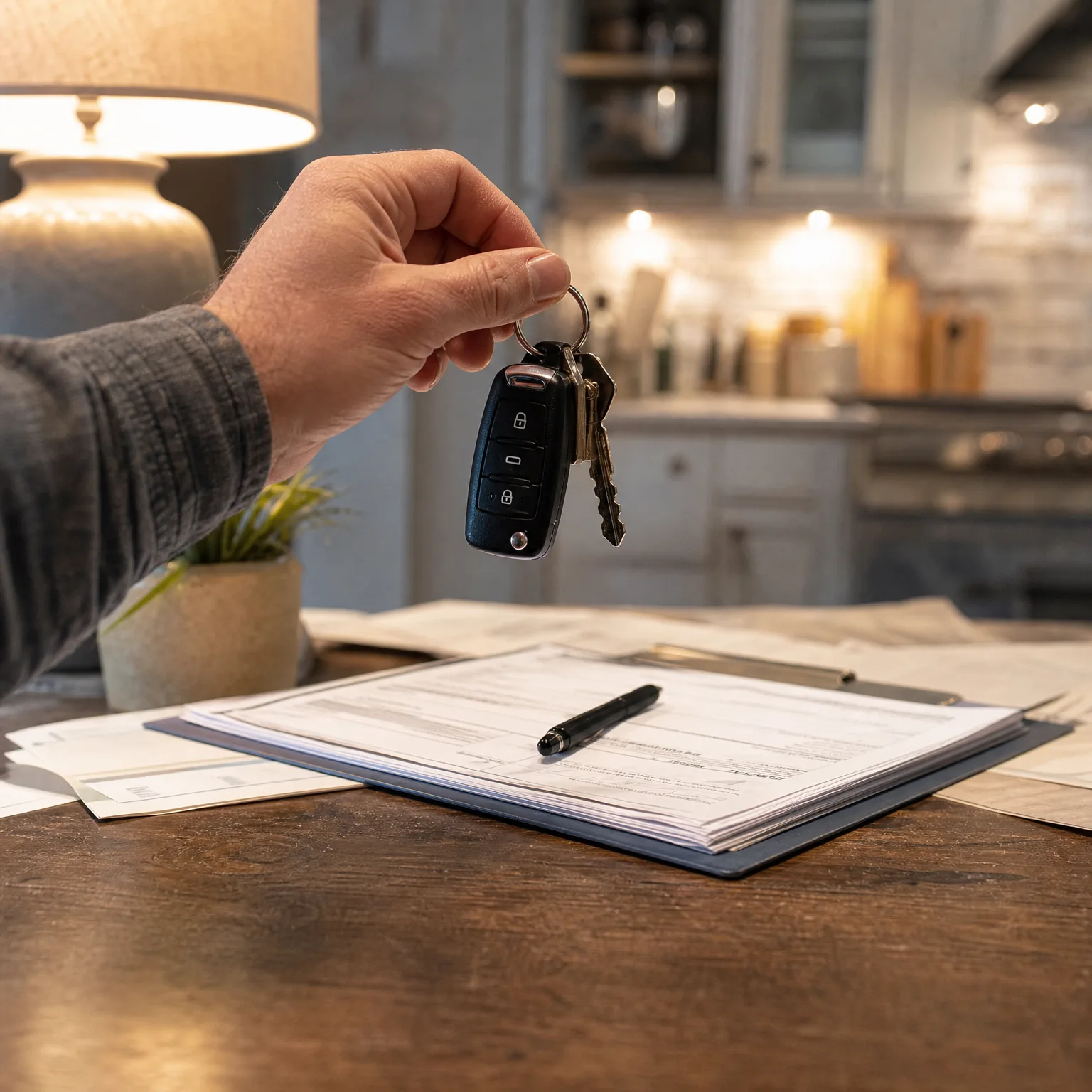
How parked vehicle accidents affect insurance rates
A single at-fault accident with a parked vehicle typically increases premiums 20-40% at renewal, with the surcharge lasting three to five years depending on your carrier's tier classification system. The exact increase depends on whether your insurer categorizes this as a minor or standard at-fault incident.
Carriers that use minor/major/severe violation tiers often place low-speed parking lot collisions under $2,000 in total damage into a lower surcharge bracket—around 20-25% for three years. Standard at-fault accidents with higher damage or injuries trigger 35-50% increases for five years. Your carrier's internal guidelines determine which bracket applies, and those classifications vary significantly between insurers.
Drivers with existing violations face compounding rate impacts. If you already carry SR-22 coverage due to a previous violation, adding an at-fault accident can push you into non-standard carrier territory where premiums double or triple baseline rates. The accident doesn't add points to your license in most states, but it does reset your claims-free discount clock and moves you into a higher-risk underwriting tier.

State-specific damage reporting thresholds
Most states require you to file a police report or DMV accident report when total property damage exceeds a specific dollar threshold, regardless of fault. Common thresholds range from $500 to $2,500 depending on state law. Missing this filing deadline can result in license suspension, fines, or both.
In California, you must report any accident with damage over $1,000 or any injury to DMV within 10 days using form SR-1. Florida requires a written crash report within 10 days if damages exceed $500 or anyone is injured. Texas sets the threshold at $1,000 and requires reporting within 10 days of the accident.
The reporting trap emerges when initial damage estimates fall below the threshold but the other driver's repair quote comes in higher. You're required to report based on actual damage, not your initial visual assessment. If the other vehicle owner gets a $1,800 estimate three days after the accident and you haven't filed because you thought damage was under $1,000, you've missed the compliance window in states with immediate reporting requirements.

See Who Will Insure You After a Ticket
Find Coverage After a Traffic ViolationWhen you must notify your insurance carrier
Your insurance policy requires you to report any accident "promptly" or "as soon as practicable," language that typically means within 24-72 hours regardless of whether you plan to file a claim. This notification requirement exists separately from state reporting laws and applies even if damage falls below your state's legal threshold.
Carriers enforce late reporting as a policy violation because delayed notification prevents them from conducting timely damage assessments, interviewing witnesses, and documenting the scene. If you wait two weeks to report a parking lot accident and the other driver has already filed a claim, your carrier may deny coverage entirely or surcharge you for the late report in addition to the at-fault claim.
The notification timing creates a strategic pressure point: reporting immediately protects you from policy violations but triggers the claims process and rate increase even if you intended to pay out-of-pocket. Not reporting risks a coverage denial if the other driver files first. Most violation-history drivers should report within 24 hours and then decide whether to formally file a claim based on total damage estimates.

Whether to file through insurance or pay out-of-pocket
The break-even calculation depends on repair cost versus your expected three-year surcharge total. If the other vehicle's damage costs $1,200 to repair and your premium would increase $35/month for 36 months, you'd pay $1,260 in surcharges—making the claim slightly more expensive than paying directly.
Drivers with violation history face steeper math. If you're already paying $180/month for non-standard auto insurance, a 30% surcharge adds $54/month or $1,944 over three years. A $1,500 parking lot claim becomes $2,000+ more expensive than paying the repair yourself. This calculation assumes no additional violations during the surcharge period.
Paying out-of-pocket only works if both parties agree and you document the arrangement in writing. Get a signed release stating the other driver accepts your payment as full settlement and waives the right to file an insurance claim later. Without this documentation, they can accept your $1,200 check and still file a claim with their carrier six months later, leaving you with both the out-of-pocket cost and the insurance surcharge.

How carriers discover unreported parked vehicle accidents
The most common discovery path is the other driver filing a claim with their own carrier under collision or uninsured motorist property damage coverage. Their insurer then pursues subrogation against you by contacting your carrier directly, triggering the claim on your policy even though you never reported it.
Carriers also receive accident data from LexisNexis and other data aggregators that compile police reports, DMV filings, and claims across insurers. If you filed a state-required accident report but didn't notify your carrier, that report appears in their underwriting database at your next renewal and generates a policy inquiry.
Some states operate shared databases where all reported accidents become visible to insurers during routine policy renewals or coverage checks. A parking lot accident you reported to police to satisfy state law but didn't mention to your carrier can surface 8-12 months later during renewal underwriting, at which point the carrier applies the surcharge retroactively or non-renews your policy for material misrepresentation.
Frequently Asked Questions
Does hitting a parked car count as an at-fault accident if no one saw it happen?
Yes—fault is determined by the collision circumstances, not whether witnesses were present. Hitting a parked vehicle makes you at-fault because the stationary car had no ability to avoid the accident. Leaving the scene without exchanging information or filing a report elevates this to hit-and-run, which adds criminal penalties and typically results in immediate policy cancellation.
How long does an at-fault parked car accident stay on my insurance record?
Most carriers apply surcharges for three to five years from the accident date, with the exact duration depending on your insurer's tier classification. The accident remains visible in claims databases like LexisNexis and CLUE for seven years, meaning new carriers see it during underwriting even after your current insurer stops surcharging for it.
Can I lose my license for not reporting a parked vehicle accident?
Yes, if total damage exceeds your state's reporting threshold and you miss the filing deadline. Most states suspend licenses for 30-90 days for failure to file required accident reports, and reinstatement requires submitting the overdue report, paying fines, and often filing SR-22 proof of insurance for one to three years.
Will my rate increase if I report the accident but don't file a claim?
Reporting the accident to your carrier without filing a claim typically doesn't trigger a surcharge, but the accident becomes part of your policy file. If the other driver files a claim later, your carrier already has your initial report on record. Some carriers apply small surcharges for any reported at-fault accident regardless of claim status, so confirm your policy's specific notification rules.
What happens if the parked car owner doesn't want to involve insurance?
You can settle directly if both parties agree, but get a written release signed by the other driver stating they accept your payment as full settlement and waive future claims. Without this documentation, they can accept your money and still file an insurance claim later, leaving you responsible for both the out-of-pocket payment and the insurance surcharge.
Related Articles

Parking Lot At-Fault Accident: Rate Impact Guide
5/17/2026

Single-Vehicle Accident Rate Impact: What Drivers Pay
5/17/2026

At-Fault Accident, No Police Report: Rate Impact
5/17/2026

How Long Does an At-Fault Accident Affect Insurance?
5/17/2026

At-Fault Crash Under $1K: Reporting Rules & Rate Impact
5/17/2026

Cheapest Insurance After At-Fault Accident by State
5/17/2026