
Texting While Driving in California: Rates & Points Impact
Find Coverage After a Traffic ViolationWhat a California texting while driving ticket actually costs beyond the fine
The $162 base fine for a first texting violation in California is the smallest component of total cost. Insurance carriers classify distracted driving violations as minor to moderate risk events, triggering premium surcharges that persist for three years from the conviction date. The average California driver sees a 15–35% rate increase after a texting conviction, translating to $420–$960 in added premium costs over the surcharge period for a driver paying $95/month before the violation.
Carriers price the violation at your next renewal cycle following conviction, not citation issuance. If you receive a ticket in March and renew in May, the surcharge appears immediately. If you renew in January and are cited in March, you have until your next January renewal before the increase applies — assuming conviction occurs before that cycle.
The one-point DMV assessment appears on your driving record within 30–60 days of conviction and remains visible for three years. While one point alone doesn't trigger license suspension — California's negligent operator threshold is four points in twelve months — it becomes cumulative risk if you accumulate additional violations during the three-year window.
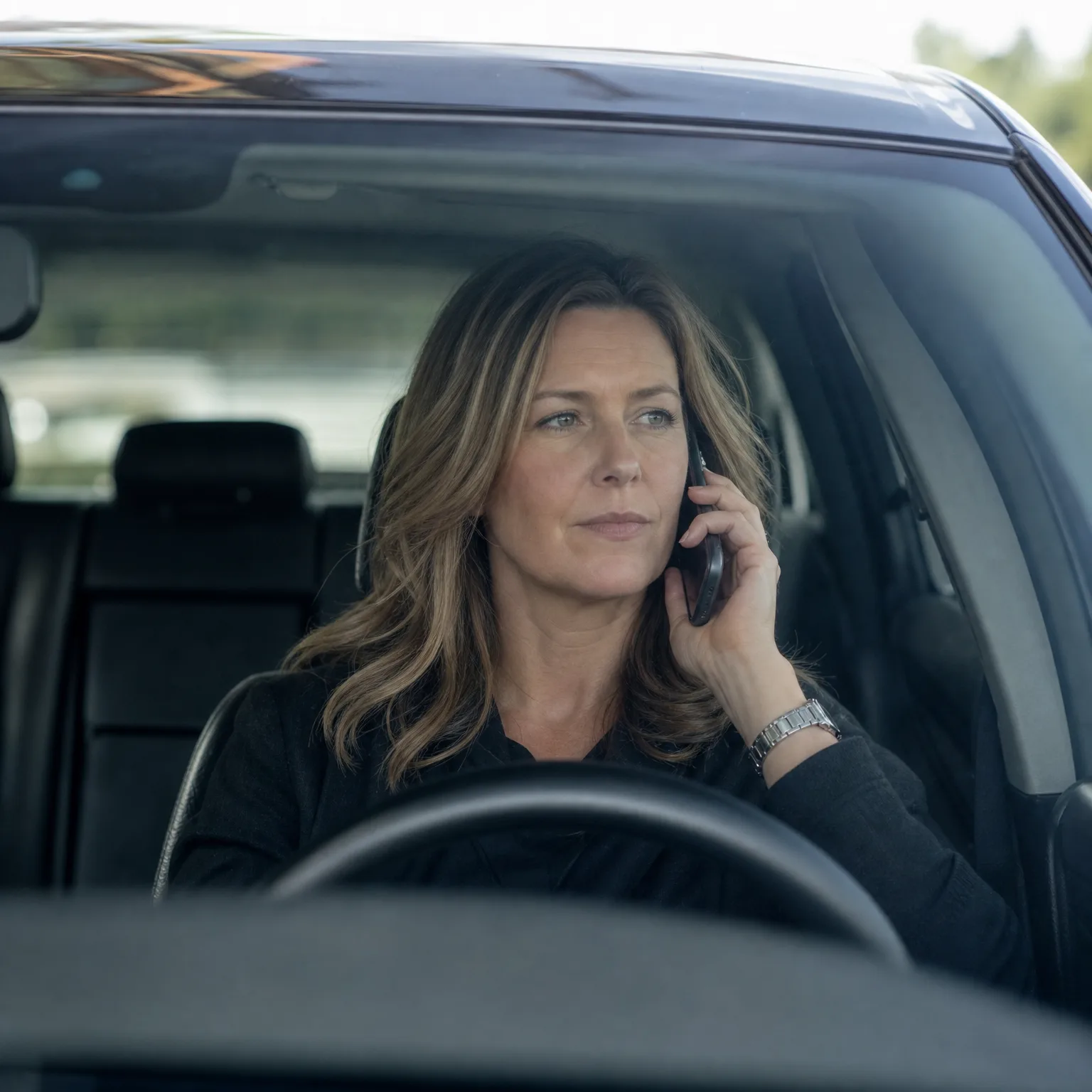
How California carriers tier texting violations differently than DMV point values
California's DMV assigns one point to handheld device violations under Vehicle Code 23123.5, treating texting identically to other one-point infractions like failure to signal or running a stop sign. Insurance carriers use separate internal classification systems that don't map directly to DMV point values.
Most California carriers classify texting as a minor moving violation, triggering surcharges in the 15–25% range. Progressive, State Farm, and Farmers typically place distracted driving citations in this tier. GEICO and Allstate historically apply slightly higher surcharges — 20–35% — treating handheld violations as moderate risk based on distraction-related claim data rather than point total.
The classification gap matters because a one-point speeding ticket and a one-point texting violation often produce different insurance outcomes at the same carrier. Some insurers bundle all one-point violations into a single minor tier. Others separate equipment violations, distraction violations, and speed-related infractions into distinct risk categories even when DMV point totals match.
Carrier tier placement determines both surcharge percentage and duration. Minor violations typically increase rates for three years. If your carrier classifies texting as moderate risk, the same violation may carry a four- or five-year surcharge period depending on underwriting guidelines.


When the violation appears on your insurance record and what triggers the surcharge
Insurance carriers pull motor vehicle records during underwriting reviews, not in real time. Your texting citation becomes visible to insurers once the conviction is reported to the California DMV, which typically occurs within 30–60 days of paying the fine or completing traffic school if eligible.
The surcharge doesn't activate the day your conviction posts. It applies at your next policy renewal after the conviction appears in the carrier's underwriting system. If you're mid-term when convicted, you have until renewal to prepare for the increase or shop for a more competitive post-violation carrier.
Some California drivers attempt to dismiss or reduce the citation through traffic school to avoid the point entirely. California allows one traffic school dismissal every 18 months for eligible violations. Texting citations under VC 23123.5 qualify for traffic school if it's your first distracted driving offense and you don't hold a commercial license. Completing traffic school prevents the point from posting to your public DMV record, which blocks insurance visibility in most cases.
Carriers that run MVR checks before traffic school completion may see the initial citation. If the point is later masked through traffic school, the record won't show a conviction at subsequent renewals. Timing matters: completing traffic school before your renewal cycle gives you the cleanest path to avoiding the surcharge.

See Who Will Insure You After a Ticket
Find Coverage After a Traffic ViolationWhich California carriers apply the lowest surcharges after distracted driving violations
Post-violation carrier pricing varies more than clean-record pricing. A driver paying $110/month with GEICO before a texting conviction might see rates jump to $145/month after conviction — a 32% increase. The same driver switching to State Farm post-violation might pay $125/month, a smaller surcharge despite moving carriers.
California Farm Bureau, CSAA, and Wawanesa historically apply lower surcharges to minor moving violations than the national average. These carriers often treat first-offense distracted driving citations as tier-one minor violations with three-year surcharges in the 12–20% range. Availability varies by county — CSAA operates primarily in Northern California, while Wawanesa requires membership eligibility.
Progressive and The Hartford tend to remain competitive for drivers with one minor violation, particularly if you bundle policies or qualify for continuous insurance discounts that offset part of the surcharge. Mercury Insurance applies moderate surcharges but offers accident forgiveness programs that can shield a subsequent at-fault claim if the texting violation is your only incident.
Post-violation rate shopping is most effective in the 30 days before your renewal. Carriers quote based on current MVR data, so applying after the conviction posts but before your current carrier renews the policy lets you compare true post-violation pricing across multiple options.

How long the texting violation affects your insurance rates in California
California insurance carriers apply surcharges for three years from the conviction date for minor moving violations, which includes most first-offense texting citations. The three-year clock starts the day the court enters your conviction, not the day you were cited or the day your insurer applies the surcharge.
If you're convicted on June 15, 2025, the violation remains surcharge-eligible until June 15, 2028. Your carrier will stop applying the increase at the first renewal on or after that date, assuming no additional violations appear during the lookback period. The DMV point remains on your record for three years as well but becomes non-countable for negligent operator purposes once the three-year period expires.
Some carriers extend surcharge duration to four or five years for violations they classify as moderate or major risk. If your insurer applies a longer surcharge window, that detail appears in your policy declarations or underwriting summary. California law doesn't cap surcharge duration — carriers set their own timelines based on actuarial risk models.
Re-shopping at the three-year mark is standard practice. Once the violation ages out, your risk profile returns to clean-record status, and you may qualify for better rates than your current carrier offers for tenured post-violation customers.

Whether SR-22 filing is required after a California texting violation
California does not require SR-22 insurance for a standalone texting while driving conviction under VC 23123.5. SR-22 filing is mandated only for specific triggering events: DUI convictions, at-fault accidents without insurance, multiple violations leading to license suspension, or reckless driving convictions.
A single texting citation adds one point to your record. California's negligent operator threshold for SR-22 filing is four points in twelve months, six points in twenty-four months, or eight points in thirty-six months. One texting violation alone doesn't approach these thresholds.
If the texting citation is your second or third violation within a short window and pushes you over the negligent operator point threshold, the DMV will issue a Notice of Intent to Suspend. At that stage, SR-22 becomes required to maintain or reinstate your driving privileges. The texting ticket itself isn't the SR-22 trigger — the cumulative point total is.
SR-22 requirements add $15–$25 in annual filing fees and often require switching to a carrier that accepts high-risk drivers if your current insurer doesn't file SR-22 certificates. Avoiding additional violations during the three-year lookback period keeps you below the negligent operator threshold and avoids SR-22 entirely.
Frequently Asked Questions
How much does insurance go up after a texting ticket in California?
California drivers typically see insurance rates increase 15–35% after a texting while driving conviction, which translates to an average of $14–$28 per month in added premiums. The surcharge applies for three years from the conviction date, making total added cost $504–$1,008 over the surcharge period for a driver paying $100/month before the violation.
Does a texting ticket add points to your license in California?
Yes. A texting while driving conviction under California Vehicle Code 23123.5 adds one point to your DMV driving record. The point remains on your record for three years from the conviction date and counts toward California's negligent operator threshold of four points in twelve months or six points in twenty-four months.
Can you do traffic school for a texting ticket in California?
California allows traffic school for texting violations if it's your first distracted driving offense within 18 months and you don't hold a commercial driver's license. Completing traffic school masks the point from your public driving record, preventing insurance companies from seeing the conviction at renewal and avoiding the rate increase.
How long does a texting violation stay on your record in California?
A texting while driving conviction remains on your California DMV record for three years from the conviction date. Insurance carriers apply surcharges for the same three-year period. Once the violation ages past three years, it no longer affects your insurance rates or contributes to negligent operator point thresholds.
Do all California insurance companies raise rates the same amount for texting tickets?
No. Surcharge amounts vary by carrier based on internal risk classification systems. Some insurers treat texting as a minor violation with 15–20% increases, while others classify it as moderate risk and apply 25–35% surcharges. Shopping carriers after conviction often reveals rate differences of $20–$40 per month for identical coverage.
Related Articles

CA Cell Phone Ticket: 1 Point But 20-50% Rate Increase
5/17/2026

CA Speeding 1-15 Over: Insurance Cost & 1-Point Impact
5/17/2026

Texting Ticket in PA: Insurance Rate Impact Guide
5/17/2026

Texting While Driving in Texas: Insurance Rate Impact
5/17/2026

CA Following Too Closely: 1-Point Rate Impact
5/17/2026

Red Light Ticket CA: 1 Point, 36-Month Rate Impact
5/17/2026