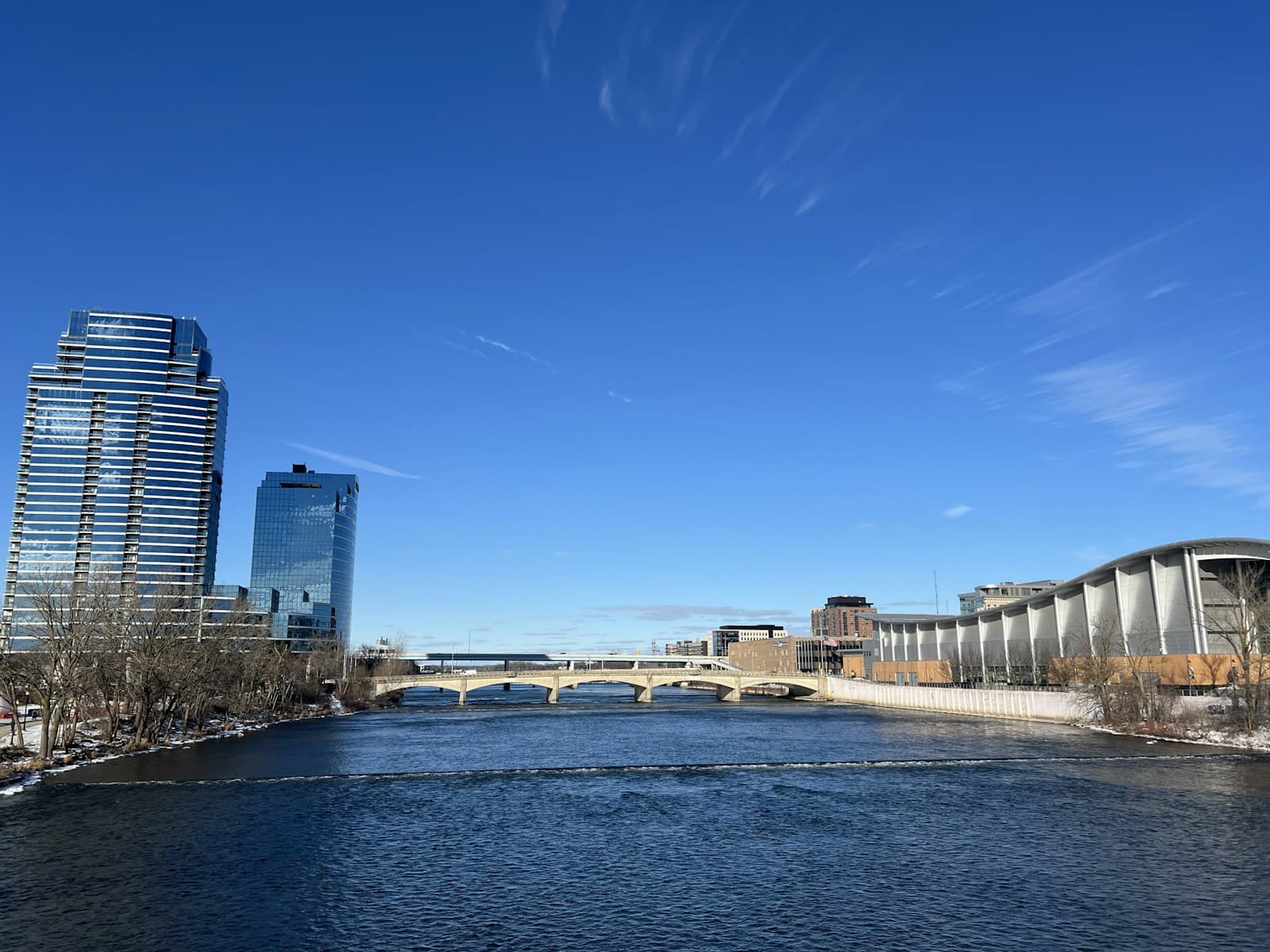
What Affects Rates in Grand Rapids
- Michigan No-Fault PIP Costs: Michigan's no-fault system with unlimited personal injury protection substantially increases base premiums for all drivers, but high-risk drivers face multipliers on already elevated costs. While PIP reform options exist, high-risk drivers typically see fewer rate benefits from opting down.
- Grand Rapids Urban Traffic Volume: As Michigan's second-largest city, Grand Rapids sees concentrated traffic on US-131 and the East Beltline, increasing accident frequency for all drivers. High-risk drivers face steeper surcharges in dense urban zones compared to surrounding Kent County suburbs.
- Lake-Effect Weather Patterns: Grand Rapids receives lake-effect snow from Lake Michigan, creating unpredictable winter driving conditions from November through March. Drivers with at-fault accident history face higher comprehensive and collision premiums due to seasonal claims patterns.
- Uninsured Driver Concentration: Kent County typically sees uninsured driver rates near 15–20%, slightly below Michigan's state average but still significant in urban Grand Rapids corridors. High-risk drivers benefit from uninsured motorist coverage given elevated accident exposure in areas with lapses.
- 54-B District Court SR-22 Processing: Grand Rapids traffic violations and license reinstatements process through 61st District Court and Michigan Secretary of State offices. SR-22 filing must reach the state before license restoration, and any lapse triggers immediate suspension with additional reinstatement fees.

Find out exactly how long SR-22 is required in your state
Coverage Recommendations
Cost estimates are based on available industry data and vary by driver profile. These are not insurance quotes.
SR-22 Insurance
Michigan requires SR-22 filing for 3 years following DUI, reckless driving, or driving without insurance convictions. The SR-22 itself costs $25–$50 to file, but underlying high-risk policy rates in Grand Rapids typically run $150–$350/month depending on violation severity and driving history.
$25–$50 filing + high-risk premiumsEstimated range only. Not a quote.
Non-Standard Auto Insurance
Carriers specializing in high-risk drivers—including those with multiple violations, DUIs, or lapses—operate in Grand Rapids through both local agents and direct writers. Non-standard policies accommodate drivers standard carriers decline, with monthly costs reflecting risk tier and Michigan's elevated PIP requirements.
$150–$400/mo typical rangeEstimated range only. Not a quote.
Full Coverage
High-risk drivers in Grand Rapids with financed vehicles must carry comprehensive and collision alongside liability and PIP. Full coverage for drivers with violations typically costs $200–$450/month, with deductibles of $500–$1,000 helping manage monthly premiums while meeting lender requirements.
$200–$450/mo for high-risk driversEstimated range only. Not a quote.
Liability Insurance
Michigan requires minimum 50/100/10 liability limits, but high-risk drivers in Grand Rapids benefit from 100/300/100 given elevated accident risk and potential judgment exposure. State minimums keep monthly costs lower but leave significant personal asset exposure after at-fault crashes.
Minimums $80–$200/mo after violationsEstimated range only. Not a quote.