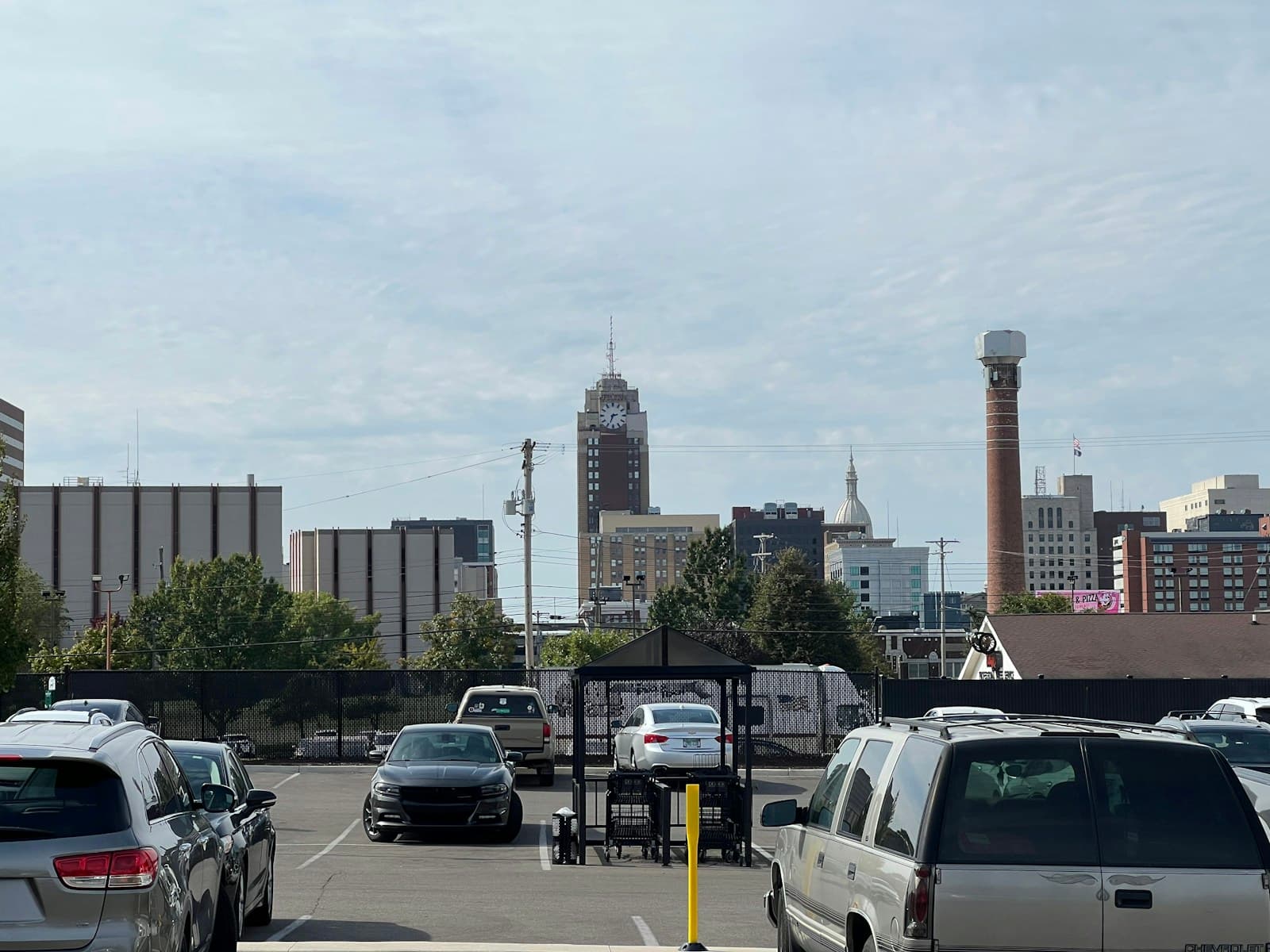
What Affects Rates in Lansing
- Michigan No-Fault PIP Requirements: Michigan's unlimited Personal Injury Protection default dramatically increases base premiums for all drivers, but high-risk drivers in Lansing face compounded costs—expect total premiums 60–120% higher than liability-only states. Opting for lower PIP limits ($50k or $250k) where eligible can reduce monthly costs by $80–$150 for high-risk policies.
- Urban Accident Frequency in Ingham County: Lansing's position as a mid-sized capital city means moderate traffic density on I-96, I-69, and US-127 corridors, with accident rates elevated near downtown and Michigan State University areas in adjacent East Lansing. High-risk drivers living in 48912, 48910, and 48915 ZIP codes typically see 8–15% higher quotes than outer suburbs due to crash frequency data used in underwriting models.
- Seasonal Weather Impact on Violations: Michigan winters bring snow and ice from November through March, contributing to increased at-fault accidents and subsequent rate increases for drivers already in high-risk categories. A winter-related at-fault accident while on SR-22 filing extends elevated premium periods and may trigger policy non-renewal with some carriers.
- Non-Standard Carrier Concentration: Lansing has access to non-standard and high-risk specialists including The General, Direct Auto, and regional Michigan carriers that write post-DUI and suspended license drivers. Competition among these carriers means rate spreads of $100–$200/month for identical coverage, making multi-carrier comparison essential for high-risk applicants.
- Secretary of State SR-22 Monitoring: Michigan Secretary of State receives electronic SR-22 filings and monitors continuous coverage—any lapse triggers automatic license re-suspension and restarts the 3-year filing clock. Carriers in Lansing vary significantly in their lapse notification procedures and reinstatement support, affecting total cost of maintaining compliance.

Find out exactly how long SR-22 is required in your state
Coverage Recommendations
Cost estimates are based on available industry data and vary by driver profile. These are not insurance quotes.
SR-22 Insurance
SR-22 is a certificate of financial responsibility filed by your insurer with Michigan Secretary of State, required after DUI, suspended license, major violations, or uninsured accidents. The filing itself costs $25–$50, but the underlying high-risk auto policy in Lansing runs $150–$450/month depending on violation severity and coverage limits selected.
$150–$450/mo plus $25–$50 filing feeEstimated range only. Not a quote.
Non-Standard Auto Insurance
Non-standard carriers specialize in high-risk drivers rejected by standard insurers, offering policies to drivers with DUIs, multiple violations, or license suspensions in Lansing. These policies meet Michigan's no-fault requirements and can file SR-22, though premiums typically run 40–80% higher than standard market equivalents due to elevated underwriting risk.
$180–$500/mo for liability; $300–$650/mo for full coverageEstimated range only. Not a quote.
Liability Insurance
Michigan requires minimum liability of $50,000 per person/$100,000 per accident for bodily injury and $10,000 property damage, but high-risk drivers in Lansing often face non-renewal or rate increases if carrying only minimums after violations. Increasing to $100k/$300k/$50k adds $30–$60/month but provides critical protection and demonstrates responsibility to underwriters at renewal.
$120–$280/mo for state minimums; $150–$320/mo for $100k/$300kEstimated range only. Not a quote.
Full Coverage
Full coverage combining liability, collision, comprehensive, and Michigan's no-fault PIP becomes expensive for high-risk drivers in Lansing—expect $250–$450/month with high deductibles ($1,000–$2,500) to keep premiums manageable. Required if financing a vehicle, and necessary to protect equity in vehicles worth more than $5,000–$8,000 given repair costs in Greater Lansing area.
$250–$450/mo with $1,000+ deductiblesEstimated range only. Not a quote.